
Assumption Parish Criminal Court Cases
The 23rd Judicial District Court hears Assumption Parish felonies and parish-level misdemeanors. It shares a district with Ascension and St. James parishes, yet Assumption case records stay with the Assumption Parish Clerk of Court. There is no separate county-court and district-court clerk split. Each filed prosecution receives a docket number that ties the case caption, charge counts, minute entries, motions, disposition, and sentence to one judicial file.
The clerk maintains the criminal index and minutes at 4809 Highway 1 in Napoleonville. Staff accept filings, provide public inspection, and issue plain or certified copies, but cannot give legal advice. A citation under a Napoleonville ordinance may instead reach the town's mayor's court. Because no public municipal case portal was found, confirm the issuing court before assuming every local citation belongs in the district docket.
The 23rd JDC Assumption Docket
A sheriff charge and a court charge are not always the same. Deputies describe alleged offenses at arrest. The district attorney later decides whether to file a bill of information, seek an indictment, amend counts, or decline prosecution. A bill of information is a formal charge filed by the prosecutor where Louisiana law allows it. An indictment is a grand jury accusation. Neither one proves guilt.
The court docket is the best place to follow that decision. Read each count separately. One Assumption Parish criminal case may contain a dismissed count, a plea on another count, and a sentence on a third. The 23rd Judicial District Attorney prosecutes the case; the clerk records what occurs; the judge decides court matters. Those roles explain why a sheriff release cannot supply a certified disposition.
- Minute entry
- The clerk's official summary of what happened during a court event.
- Disposition
- The result of one charge, such as conviction, dismissal, acquittal, or nolle prosequi.
- Nolle prosequi
- The prosecutor's formal choice not to continue a charge at that time.
- Capias
- A court writ directing that a person be taken into custody.
Searching Assumption Parish Case Records
The clerk's Record Search page is the remote starting point. It routes users toward Assumption's civil and criminal access through LCRAA and eClerks LA. Registration may be required, and index coverage or image charges can vary. The landing page does not publish a guaranteed oldest date or promise that every criminal image is online. Use a docket number when possible; otherwise pair an exact name with an approximate filing year.
- Open the clerk's record-search route and select Assumption Parish and the criminal record category.
- Enter the docket number. If it is unknown, search the full name and a narrow filing-date range.
- Check the caption, case type, filing date, and charge details before treating the result as a match.
- Open the docket chronology and read every count, minute, warrant, plea, judgment, and sentence entry.
- Contact the clerk for an unavailable image, an older file, or a certified disposition needed as official proof.
| Field Label | Type | Required | Notes |
|---|---|---|---|
| Parish | Select | Verify live | Choose Assumption Parish. |
| Record category | Select | Verify live | Choose the criminal index rather than civil or property records. |
| Name | Text | Verify live | Use an exact spelling and confirm the result with case details. |
| Case number | Text | Verify live | The most precise route to one docket. |
| Filing-date range | Date | Verify live | Narrow the range when a name returns several results. |
Assumption LCRAA and eClerks Access
The clerk's LCRAA information page explains the local link to remote records and electronic filing. The broader eClerks LA hub connects participating parish clerks. Assumption advertises access to older records, but that statement does not guarantee every old criminal document has been scanned or indexed under every name variation.
The official clerk record-search page shows how Assumption Parish criminal court cases enter the remote system.
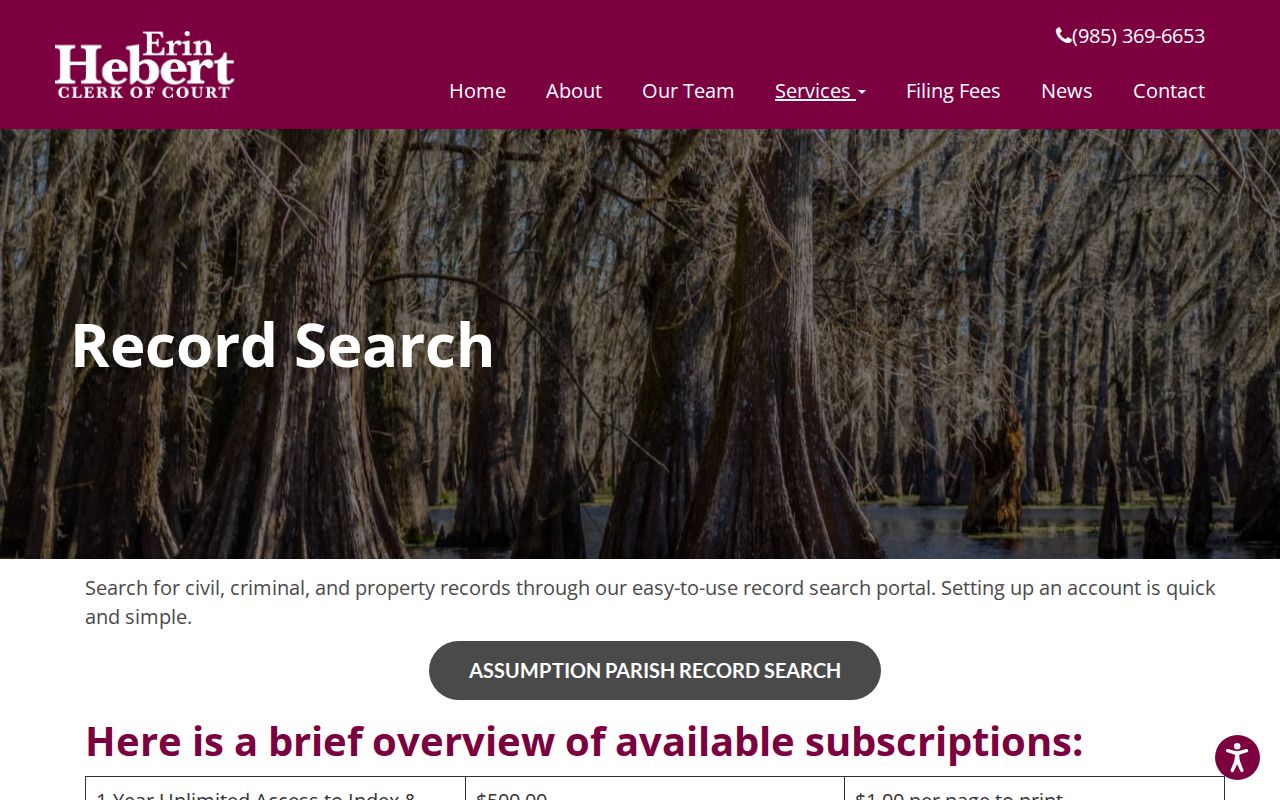
The screen is an entry point, not a completeness certificate. If a docket appears without its document image, note the case number and ask the clerk to inspect the office index.
The clerk's LCRAA explanation also shows why account access and courthouse access work together.
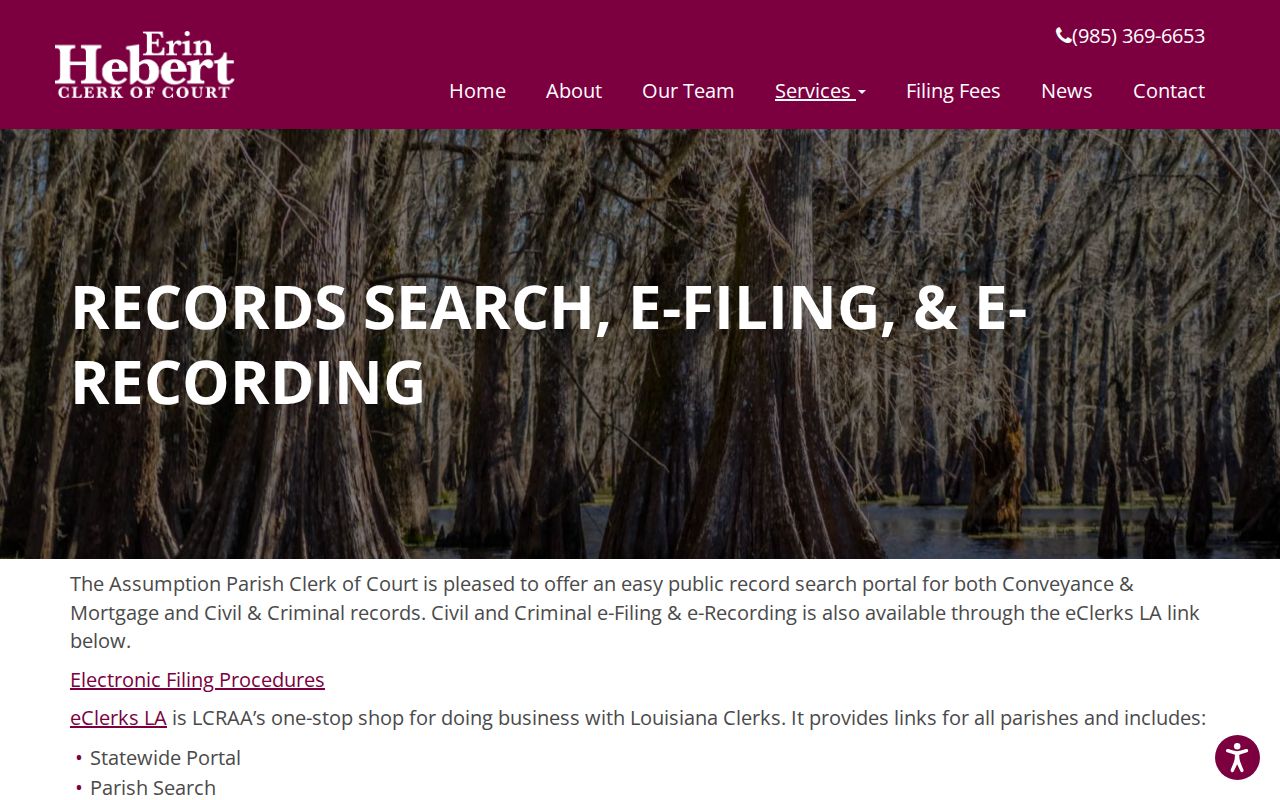
Remote access saves a trip when the index or image is available. The clerk counter remains the fallback for an incomplete result.
Inside an Assumption Parish Case File
A court file is organized around a single docket rather than a person's whole criminal history. Its header can identify the caption, filing date, judicial division, judge, and case status. Charges may show the description, statute, count, grade, and alleged offense date. Event entries then trace arraignment, motions, continuances, warrants, pleas, trial settings, judgment, sentence, probation, and later revocation activity.
| Case Number & Court | The unique docket identifier, caption, filing date, division, judge, and current status. |
|---|---|
| Charging Document | The complaint, bill of information, or indictment stating the filed counts. |
| Docket Entries | A dated index of filings, motions, minutes, continuances, warrants, and available images. |
| Hearing Dates | Arraignment, motion, trial, sentencing, and review settings recorded by the clerk. |
| Disposition & Judgment | The result for each count, including dismissal, plea, acquittal, or conviction. |
| Sentence & Conditions | Custody, probation, fines, costs, restitution, and whether terms run together or in sequence. |
Certified Assumption Parish Dispositions
A screen image may help identify a case. It is not the same as a certified court record. For authoritative proof of an outcome, ask the Assumption Parish Clerk for the disposition or other named document from the docket. The clerk publishes a $20 criminal search or background charge and $6 per certified document. Specified paper exhibits, attachments, transcripts, and depositions are listed at $2 per page, while non-paper exhibits are $5 each. Confirm which fee applies before ordering.
The clerk's published fee page distinguishes search, copy, and certification work.
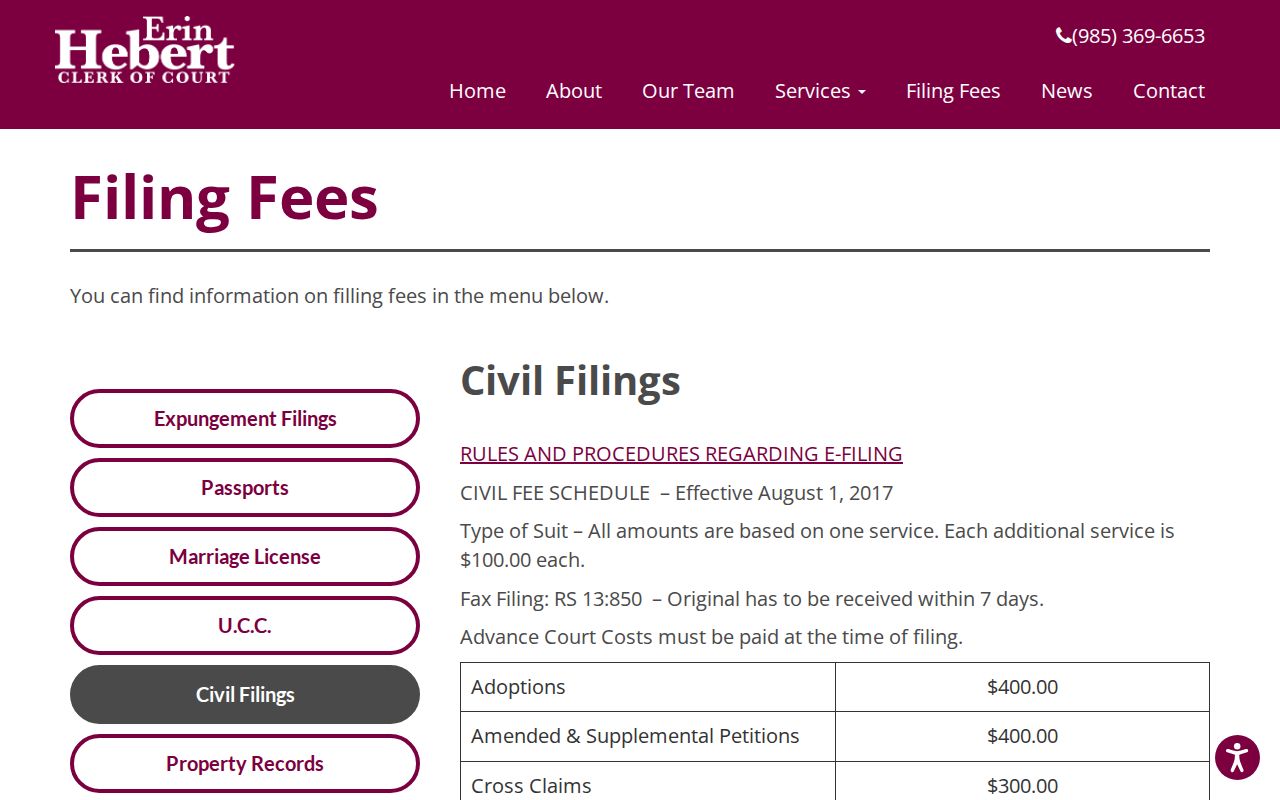
Supply the docket number and specify whether a plain copy or certified disposition is needed. That avoids paying for a broad search when the case is already known.
Assumption Parish Clerk of Court
4809 Highway 1
Napoleonville, LA 70390
985-369-6653
Monday-Friday, 8:30 a.m.-4:30 p.m.
How a Criminal Case Moves
A case can begin with an investigation and arrest, but prosecution starts only after a charging decision. The accused receives the filed charge at arraignment and enters a plea. Discovery, motions, and continuances may follow. The matter can end through a plea, trial, dismissal, or acquittal, then move to sentencing if guilt is established. An appeal or post-conviction filing can add later entries. The research did not identify a reliable parish-wide duration for each stage, so a docket's dates are more useful than a generic timetable.
Case flow: Charges Filed → Arraignment → Pretrial → Plea or Trial → Disposition → Sentencing
The clerk's jury information page shows another part of the local court workflow.
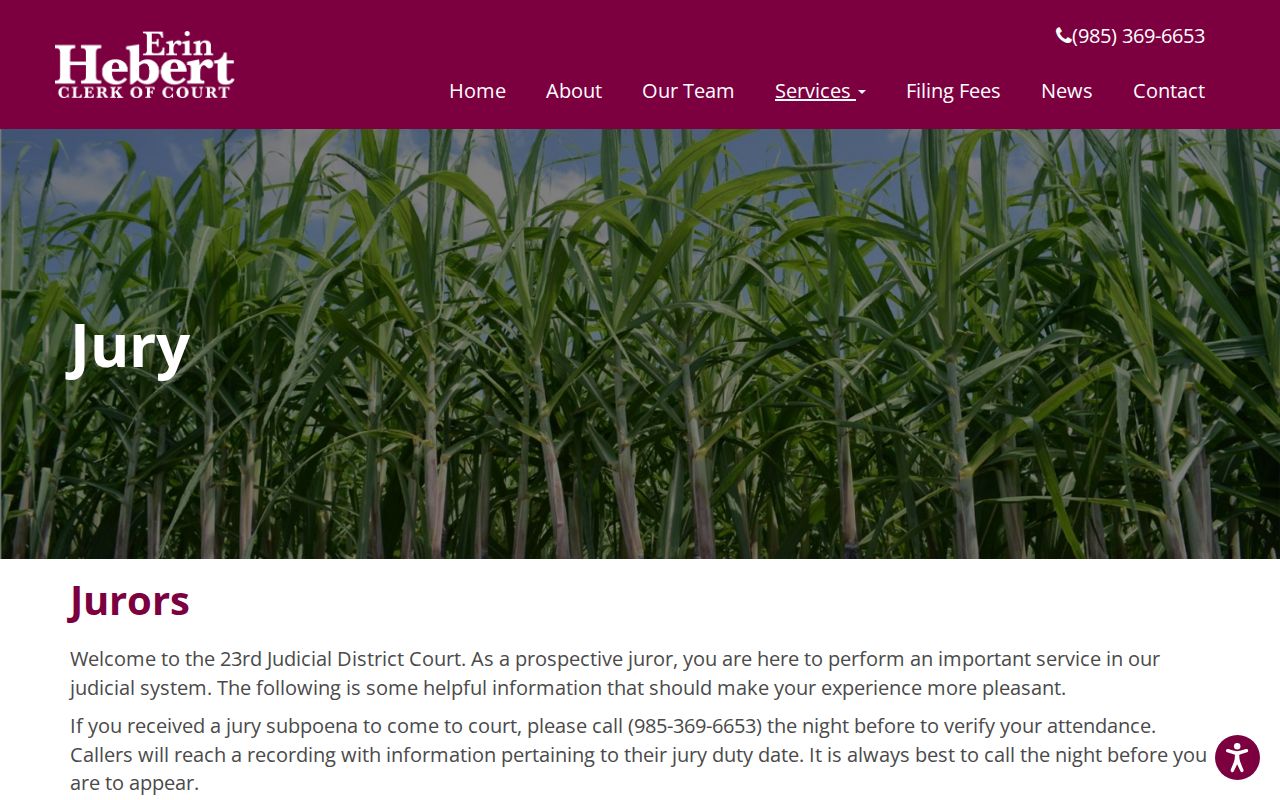
Trial settings can affect jurors as well as the docket. Parties should rely on filed court notices, while summoned jurors follow the clerk's current verification instructions.
Older Assumption Parish Court Cases
A no-result can mean a spelling mismatch, a narrow date filter, an unindexed image, or a file held only through the clerk's older-record workflow. Search name variants and remove optional filters first. Then call the clerk with the full name, approximate filing year, charge type, and any docket number found in a minute, warrant, or sheriff release.
The clerk confirms that records may be inspected in the office.

That dual route matters most for an older or unimaged Assumption Parish case. Ask staff to search the index rather than assuming an empty web result proves no case exists.
Note: Clerk staff can locate and copy records, but they cannot interpret a disposition or offer legal advice.
Case Record Access & Restrictions
Louisiana R.S. 44:31 supports the right to examine or copy public records unless another law restricts access. For Assumption Parish criminal court cases, direct the request to the clerk who holds the judicial file. Public access does not override juvenile confidentiality, an expungement order, sealed documents, protected victim or minor information, or sensitive identifiers. A public docket may therefore show an event while withholding its image or redacting part of a document.
Online access can be narrower than the record available at the courthouse. Ask whether the missing item is not digitized, restricted, sealed, or simply indexed under a different docket or name. An expungement under Louisiana Code of Criminal Procedure Articles 971-995 generally removes a qualifying record from ordinary public access while preserving specified government access. It does not mean the historical event was physically erased from every authorized system.
Court Files Versus BCII Records
One Assumption Parish docket shows one prosecution in depth. A Louisiana State Police BCII rap sheet organizes fingerprint-linked arrest cycles and reported dispositions across the state. Louisiana does not provide the general public an unrestricted name-search portal for that repository. Authorized agencies use the account-gated IBC system, while a person may request review and correction of the person's own record through BCII.
Compare the products when checking your own history. If BCII lacks a dismissal or sentence that appears in the clerk's certified record, begin the correction process with the office that originated the data and provide the certified proof. If the court search lacks the arrest, remember that the district attorney may never have filed that sheriff charge. Neither absence, standing alone, proves the other record is wrong.
The clerk also publishes Assumption-specific expungement filing information.
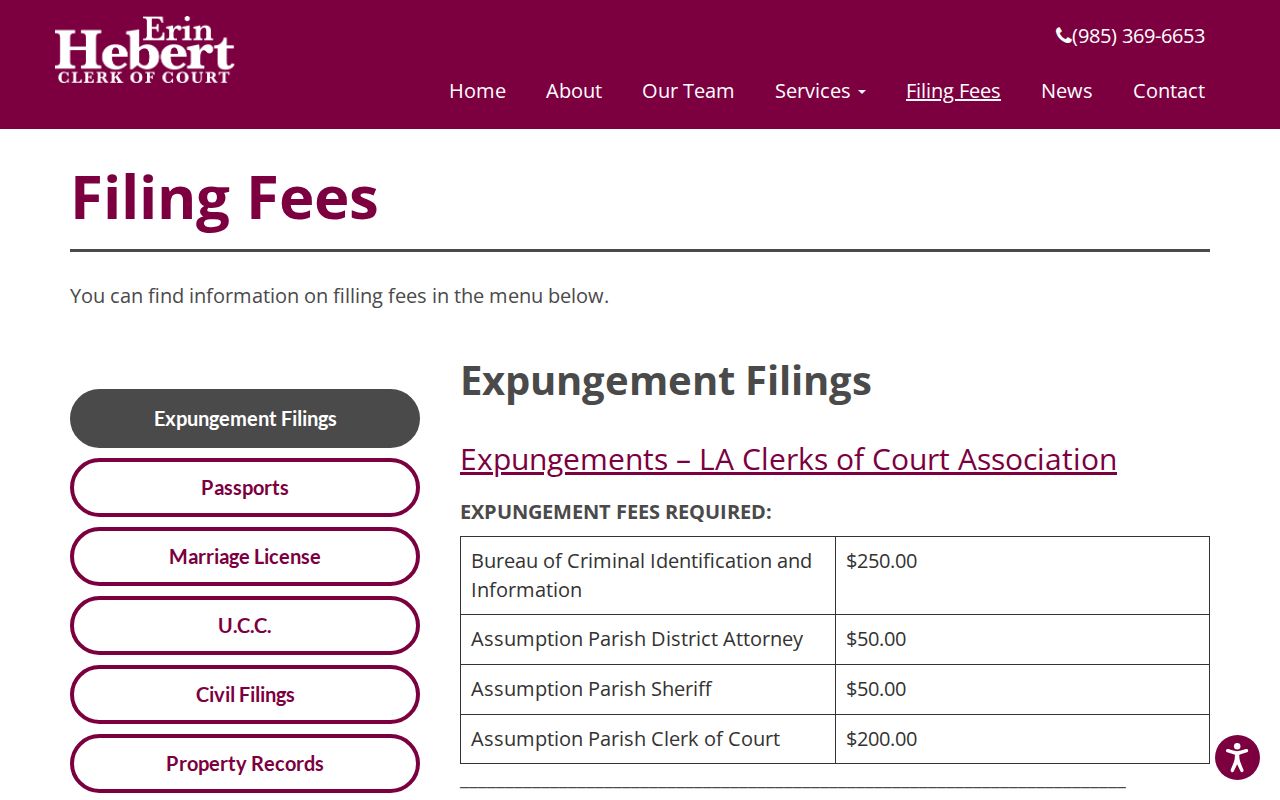
Eligibility depends on the exact charge and disposition. A sheriff headline cannot answer that question.